Leaving the peace, luxury and calm of Acari behind, we’re back on the gringo trail and experience our first night bus, to Arequipa. The buses here put any others to shame, but I’m still cursed with an inability to sleep sitting up at “160°”. James thankfully doesn’t suffer the same issue, but it’s otherwise a smooth journey and we make it to our hostel with time to kill before being able to check-in. We find a cute little crepe/coffee place with plugs, wi-fi and games where we easily pass the time doing our research for this stop. We find ourselves a ‘free’ walking tour that we can join that afternoon to get our bearings and slowly adjust to the altitude.

These ‘free’ walking tours have been brilliant to get to know parts of the city and history we would never have known without significant effort. The history of Arequipa being so different to those of Peru’s other main cities, and one that still retains a lot of incredible architectural history from its colonial past. Including many buildings and sites from the various religious iterations imposed on the people here, including architectural propaganda to ‘encourage’ the locals to convert.
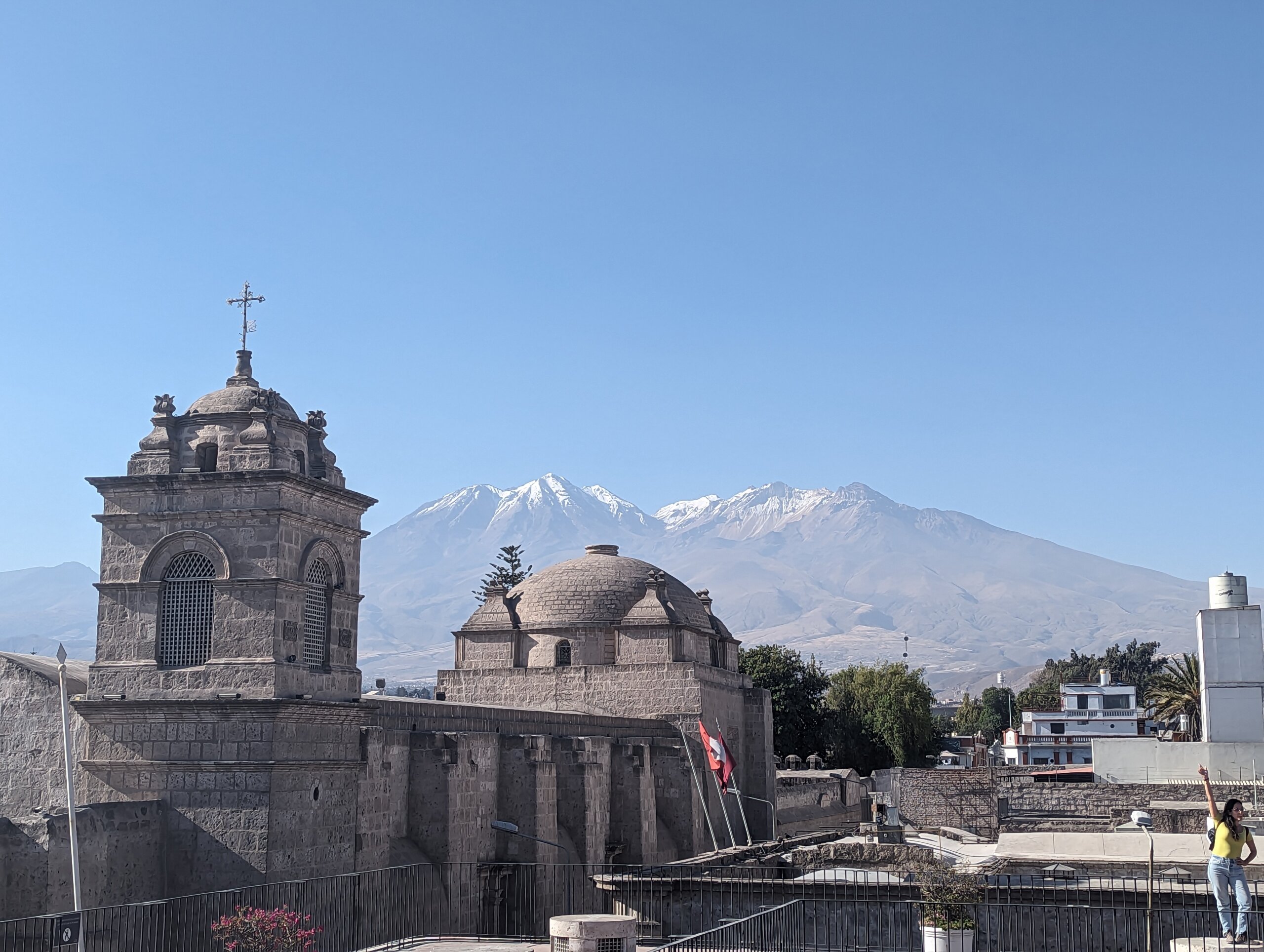
This square in the photo below, used to be an old jesuit monastery, with carvings of leaders in crowns of feathers, with maize and grapes beneath them. They’re all beautifully restored/maintained, and we get access to historical buildings to get an insight to the lives of the rich Arequipeñans from long ago. In the background is also the Chachani mountain peak, just one of three huge peaks that surround Arequipa, and inspired many offerings to the gods of pre-colonial people:

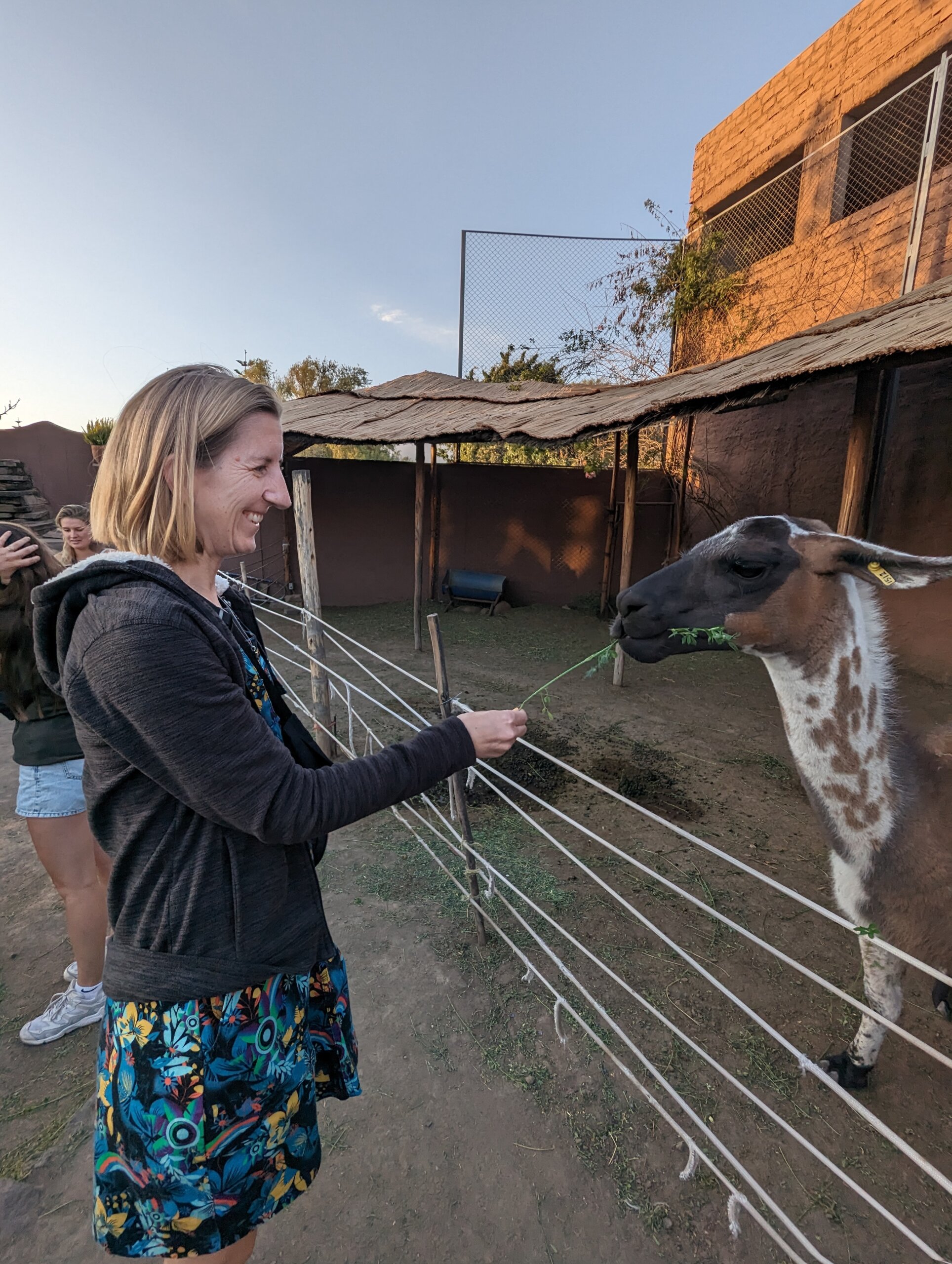
We also get taken to a cultural centre with alpacas we can feed and a lesson in textiles:
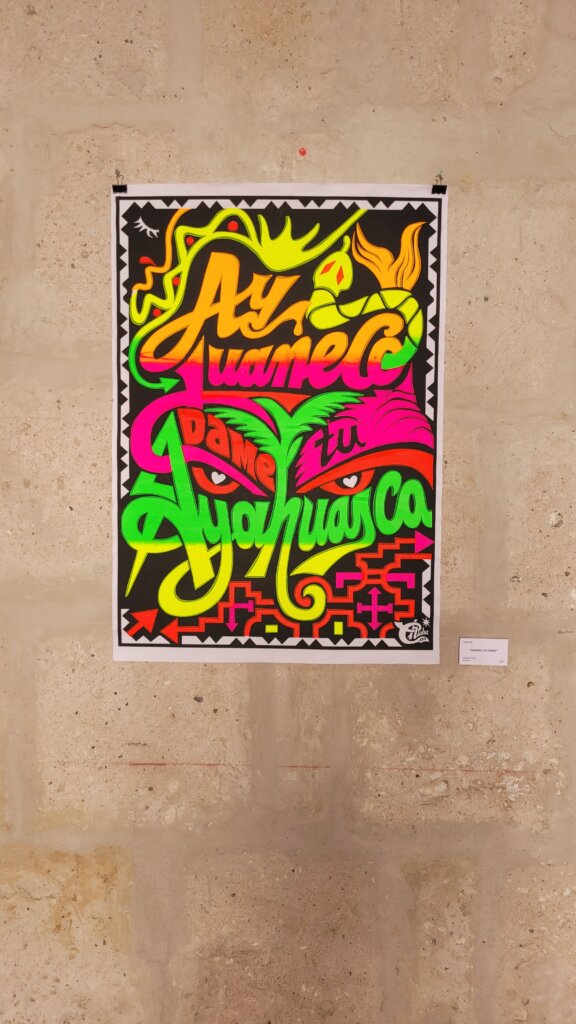
I’m continually impressed with how much Peru is leaning into celebrating its heritage. It makes me proud to see my country acknowledging and celebrating pre-colonial culture, and highlighting it to the many tourists that pass through. We even go into an exhibition of art chicha, that celebrates the bright, flourescent colours that mimics the vibrant textiles of the past:
I’m glad James gets to see this more complex and beautiful history of Peru, than the sanitised colonial one I was presented over a decade ago.
Our guide explains to us how and why Arequipaeñans feel more connected with their colonial heritage, compared to other Peruvian cities with greater connection to their pre-colonial heritage. He also offers a message of understanding that if we want to stop people coming to places searching for greater opportunity, we need to improve the situations those immigrants are coming from. Something that feels like an understanding many countries (including our own) could really do with taking on board. With much to ponder, James enjoys his first taste of alpaca, and we get an early night to catch up on sleep lost on the night before.
The next morning, after a breakfast looking out to the mountains, we went to the Monasterio de Santa Catalina, to learn even more history of young girls and women who dedicated their lives to the catholic religion, living in solitude and separated from the outside world:
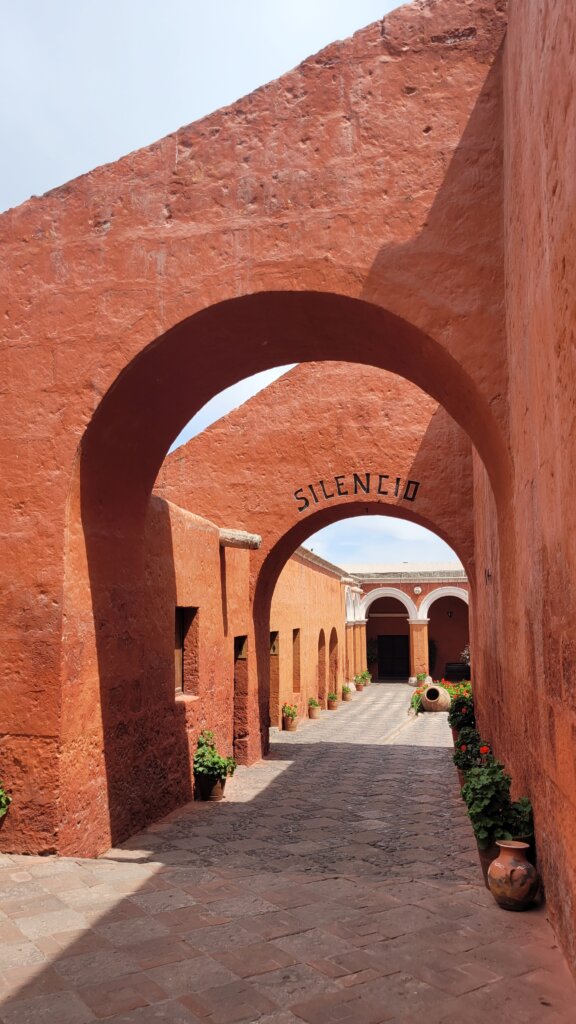
Dedication was expressed in various levels of extremism, and whilst there are still some girls/women in the sections not accessible to the public, it’s apparently difficult to ‘recruit’ these days. The part we are privileged to access is stunning and beautifully presented with bright orange and blue walls throughout:

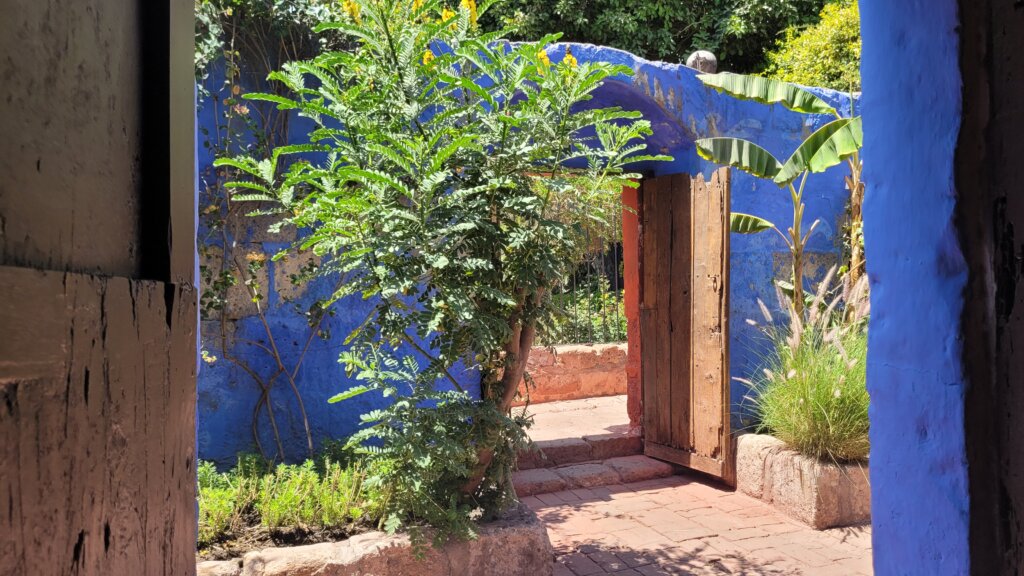
It’s another complex debate and the monastery doesn’t shy away from it. We enjoy the beauty, history, and picturesque scenes.
After the monastery, we get a La Lucha sandwich (which I was a huge fan of in Lima back in the day and very pleased to see it has expanded outside the capital), shop for a jumper (it’s cold up in these parts!), and head back for a chillout on the hostel hammocks reading under the sun looking out on the mountains:

We then packed up to be ready for our 3am colca canyon pickup the next day, and James had his first cheap and cheerful chifa.
Alex


Adventure: venturing outside tourist-ville to scout out a park to run around
Excitement: free shots on the walking tour, trying out ‘cheese’ ice-cream, having James try La Lucha chicharron, just being able to wander around the beautiful city
Trauma: not being able to get in our hostel and wandering around with our packs to find out it was where we started
1 Comment
Brilliant insight into the history and culture.wonderful pictures. The alpacas must be really clever giving you a lesson in textiles.