
Saigon Sting
For once, we have a fairly smooth journey across the border. The bus is basic but it has air-con and it’s half empty, meaning we can spread out and relax. We watch the world go by as we quickly and efficiently cross the border into Vietnam.
Ho Chi Minh City, previously known as, and sometimes still referred to as, Saigon, is our first stop in this so called “Communist” country. Sure the red flags of gold stars and the famous hammer and sickle insignia line the streets but the towering glass skyscrapers and endless businesses and franchises suggest that times may have changed. As we exit the bus we’re immediately pounced upon by smiling faces trying to sell us SIM cards. Usually it’s a taxi or food they’re selling so at least it’s something novel. We take the short walk to our modern Airbnb in the heart of the city. Alex had warned me about it but I was still shocked to see the driving standards (or total lack of) in Vietnam. Swarms of scooters fly at us in all directions, up the wrong side of the road, across pavements and through red lights, it’s a total free for all!
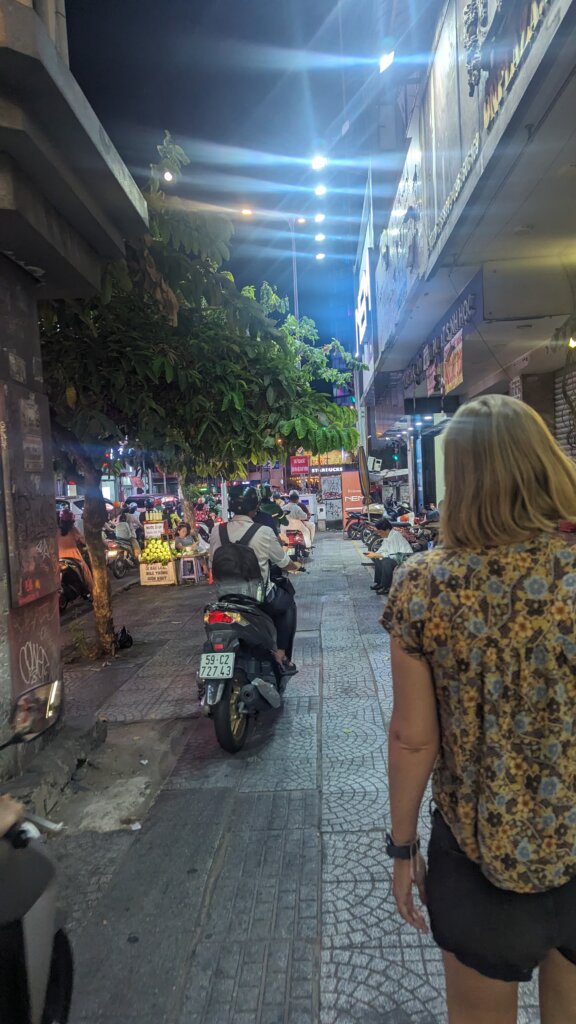
We need to do a bit of New Country Admin, but we’re also starving hungry so as soon as we’ve withdrawn cash (free ATM withdrawals hurrah!!) we hunt down the nearest Banh Mi stall. For those that haven’t had this Vietnamese delicacy, it is essentially a baguette like bread roll stuffed to the brim with various salad and meat ingredients. A snack surely inspired from when the French had colonized the country, they are everywhere and usually cost around $1! Alex has of course had them before but forgets the sting in the tail, a vicious green chili awaits at the end of the sandwich. A fiery ninja hiding in the shrub of salad leaves. I think it’s the first time I’ve seen her cry because of spice. That Indian curry pales in comparison now.


After the fire has been extinguished, we head down to the Ho Chi Minh equivalent of Khao San Road in Bangkok. It’s the middle of the day but the bar staff are already hounding us to come in and enjoy “Happy Hour”. I earmark a bar to watch the football at later and we scurry away down one of the rat run alleyways that connects the main roads. We attempt to purchase a SIM card from the Viettel store but we’re refused as we don’t have a physical passport with us. Not even a picture of it on my phone will do. I later learned this is because the Vietnamese government cracked down on 12 million(!) fake SIM cards in circulation and now a passport must be presented and verified. As we’re trudging our way back home I feel something on my ear, assuming it’s a pesky fly I swat it and it gets stuck in my hand. Throwing it on the ground it looks more like a bee, the stinger in my thumb confirms this is indeed the case. It throbs like hell for a few minutes and I hope it doesn’t swell up as they sometimes do. Luckily I think I got it out quickly enough as the sting subsides and just leaves a small needle mark on my thumb.
Super Sunday
The priority for today is not anything tourist related but finding a suitable spot to follow the London Marathon from across the world. We know ten runners from our running crew, Chasing Lights, are taking part including Lottie and Hector as well as my Dad, Dave. We decide to watch the start from the reliable wifi in our Airbnb and we’re both giddy with excitement as each notification let’s us know when each one has started the race. We watch the dots making their way across a map of London (when the app works) and cheer everyone on in spirit. After the majority of the runners have reached the halfway point we head out for dinner. We find a nice place selling local food tucked away down a busy alley. As always we’re pestered to buy massages, overpriced food and even some narcotics on our way into town. Politely refusing all of these offers, we settle down and connect to the wifi and pick the race back up. We barely pay any attention to what we’re eating as we’re so transfixed on the marathon!
There is more than one sporting event happening today, also in London, the FA cup semi-final. Manchester United vs Coventry. We return to pub street and plonk ourselves down at a bar, luckily the ‘happy hour’ seems to last all day here. While I’m half distracted by the marathon, United cruise to 3-0 up. We cheer with delight as Hector, Dad, Lottie and all of our Chasing Lights friends cross the finish line.

We send some incoherent drunken message to congratulate them. With the Reds 3-0 up with 25 minutes to go I confidently say to Alex we can finish our drinks and leave, this is all over. Of course 5 minutes later Coventry score. Much to the delight of the many “fans” on the street who would support anyone except United! Somehow the game ends up 3-3 and we have to order another round of beers and sit through extra time. It goes to penalties and a group of United fans join us for the finale. The loudest in their group, and the only one wearing a United shirt, (oddly enough he was actually Cambodian) buys me another beer as United manage to scrape through. We return home high on booze and pride around 1am.

Hungover History
With bleary eyes and sore heads we make our way across the always busy streets of Saigon. Armies of scooters stop for no one, horns beep in every direction which basically means watch out because I’m coming anyway, red light or not. With a few minutes to spare before our walking tour starts, in desperation I purchase a breakfast banh mi and an energy drink (ironically called Sting). It’s a very small group for the tour today, just Alex and I, a couple from Romania and of course our guide Joseph (not his Vietnamese name that we couldn’t pronounce).
- Viet means “Outsiders”, as opposing to the Han Chinese. Nam means “South”. So Vietnam means “Outsiders in the South”.
- Saigon means city surrounded by forest, as it used to be before it became the behemoth it is today.
- It is still referred to as Saigon by the people, and most transport agencies. But ‘Saigon’ refers to the what was, before it became Ho Chi Minh City. A place the locals were and are proud of, and continue to refer to so that the memory of that beautiful city is not forgotten (apparently).
- Before the French arrived, it was known as the land of tigers and crocodiles.
- French missionaries arrived and attempted to take over the country from the city of Hue. However, they couldn’t win and instead took the area of Saigon and redesigned it in a similar layout to Paris.
- Therefore, the “old” city is actually only 160 years old
- The city was lined with canals to assist with imports/exports to the nearby sea
- We start at the Bitexco tower, lovingly nicknamed the ‘Baguette Tower’ by the locals
- The bakery I bought my Banh Mi from was started by one woman and her food stall, who now owns a couple of buildings in this block.
- The French prioritized producing opium for the growing market, with a huge factory in the middle of Saigon.
- This is reflected in the architecture of the present day Customs House that is decorated with poppy flowers. The house originally belonged to a wealthy Chinese intermediary, the richest man in the country at the time, thanks to his work with the opium trade. The French were apparently embarrassed that an individual’s house was more grand than anything they had, so bought it off him.
- We walk down a market road known as the “Old Market” where locals sells their wares in traditional ramshackle stalls. The local authorities have attempted to move them on as they consider it an eye sore, especially so close to the fancy towers and modern malls. The locals have stood firm and held their ground.
- The only Michelin star restaurant in the city is on this street.
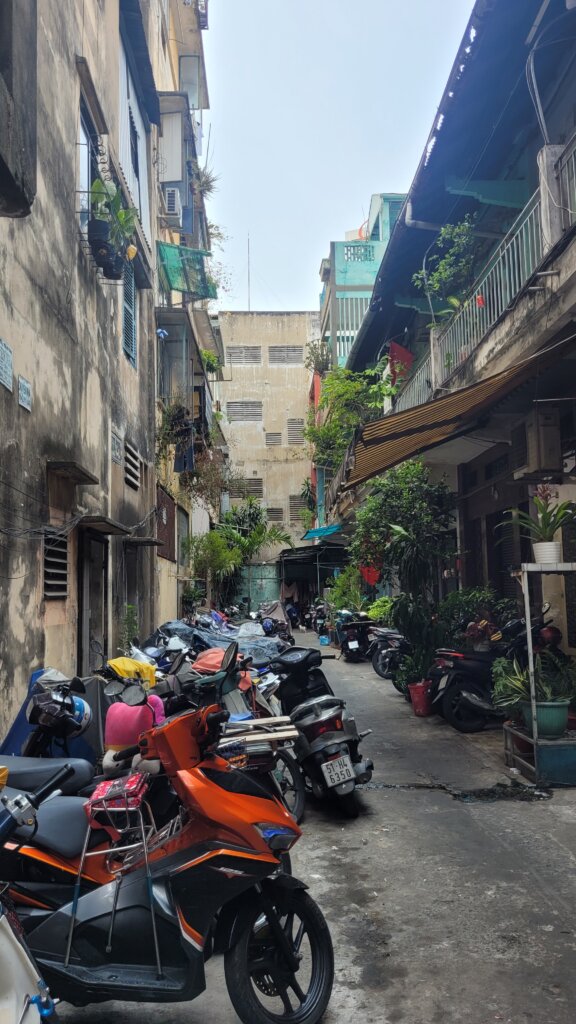
- Down a backstreet is a small alley with little accommodations distinctly Chinese. We’re told this was built specifically for the Chinese businessmen who the French would trade with. However, rather than make their money and move out, they keep their properties. He says this is because of ‘Feng Shui’ but I believe this may have been a lost in translation moment, and another word relating to with Chinese culture. You don’t sell, you keep and invest in more, growing your wealth, rather than improving a space. It means living a meagre lifestyle, not wasting money on being flashy, but growing your estate. As we look in the houses, it rings true. There is nothing ‘rich’ about these houses or the people milling about around them, except for where they are.
- Our guide has tried to find out how much one of these tiny, perfectly located properties would cost, but they never come up for sale, the asset is passed on. It reminds us of the Barbican Estate.
- Jump forwards to the American War, as the Vietnamese call it (not the Vietnam War), we see where the American Embassy was bombed due to anti-American sentiment in the country. Sadly the bomb mostly killed Vietnamese people.
- The Opera House was converted into a bomb shelter, taking down all its original, ornate features. It was then restored back to its original glory in 1998.
- We see the Rex Hotel and buildings that were often inhabited or frequented by the foreign press during the war.
- When the city fell, not only did many international people leave, but so did many locals, who had their own businesses and trade, and didn’t want to live under a communist regime that would take that away. All they could take with them was gold. Many went to the island of Palawan in the Philippines, others went to France, Canada and the USA. The different diasporas largely relate to whether they originated from the North or South. Those in the North emigrated to communist countries. The South, to the Western ones.
- When the city was taken, the government stopped investing in the far more developed Saigon, and spent the money in the North to build up the much smaller Hanoi, and poorer northern regions.
- People of Hanoi and in the North of the country have to work harder than those in Saigon and the South due to the adverse weather and climate of the North. Joseph tells us of significant cultural differences where here they enjoy spending their money and having weekends, whereas in the North you work every hour and every day and spend none of it.
- It is only since 2010 that the state has allowed investment back into Ho Chi Minh city, and there is now huge development happening in the east of the city, such as the Bitexco tower. Joseph tells us the culture is about making money, making money, and making money. That’s all that matters. So that’s why they have trade deals with the USA as much as China. It doesn’t matter the history, just whoever pays more.

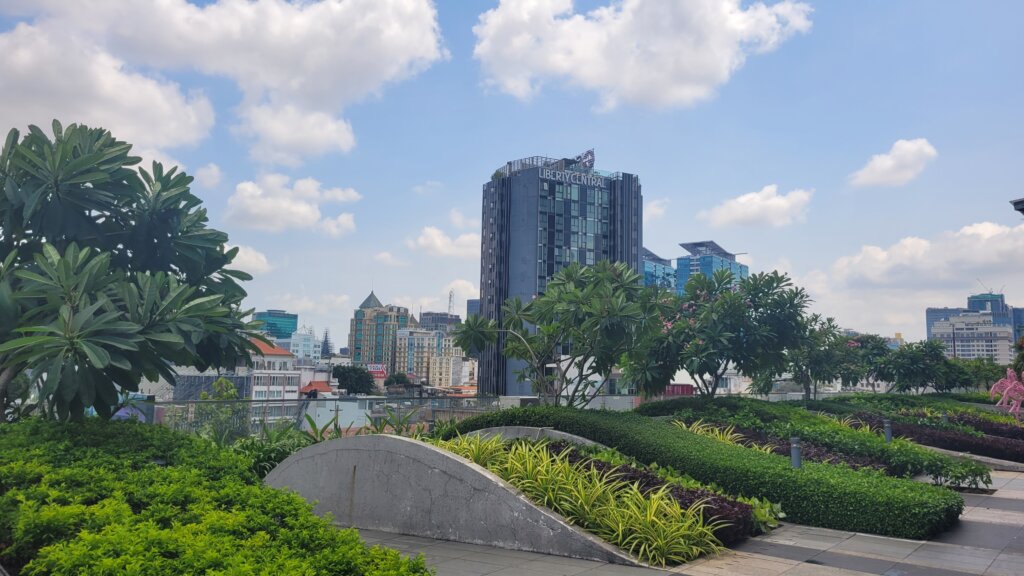


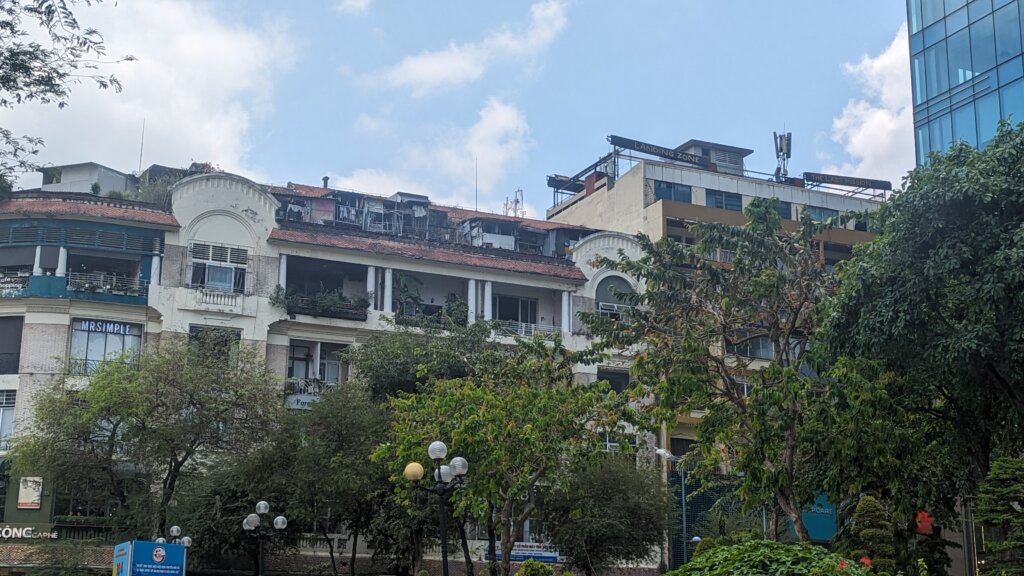
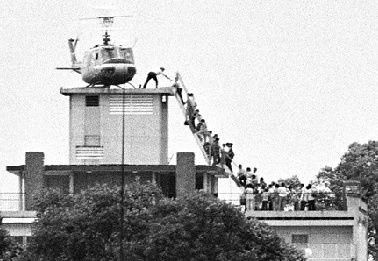
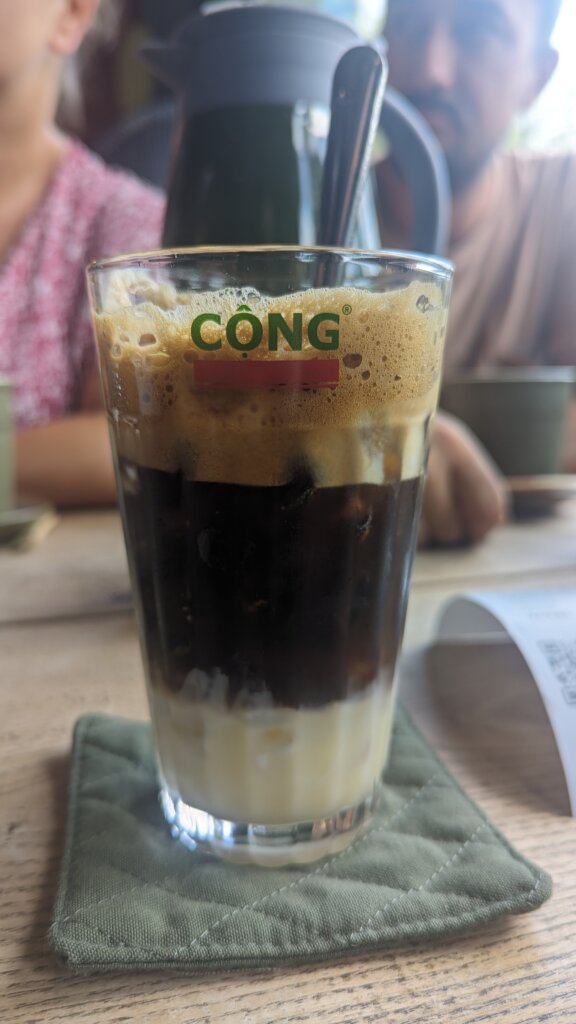
We take a break from all of this learning with a stop at a historic coffee shop. Rumour has it that the Viet Cong spies used to operate from here, right next door to the infamous US spy building where the iconic “escape from Saigon” photo was taken. There are many weird and wonderful coffees available in Vietnam from coconut coffee to egg coffee. We play it safe to begin with and enjoy an ice cold coffee mixed with condensed milk. It’s great for the hangover.

We finish the walking tour passing by the miniature version of Notre Dame, sadly it is heavily under repair at the moment (perhaps in unison with the one in Paris?) so a photo of scaffolding will have to do.

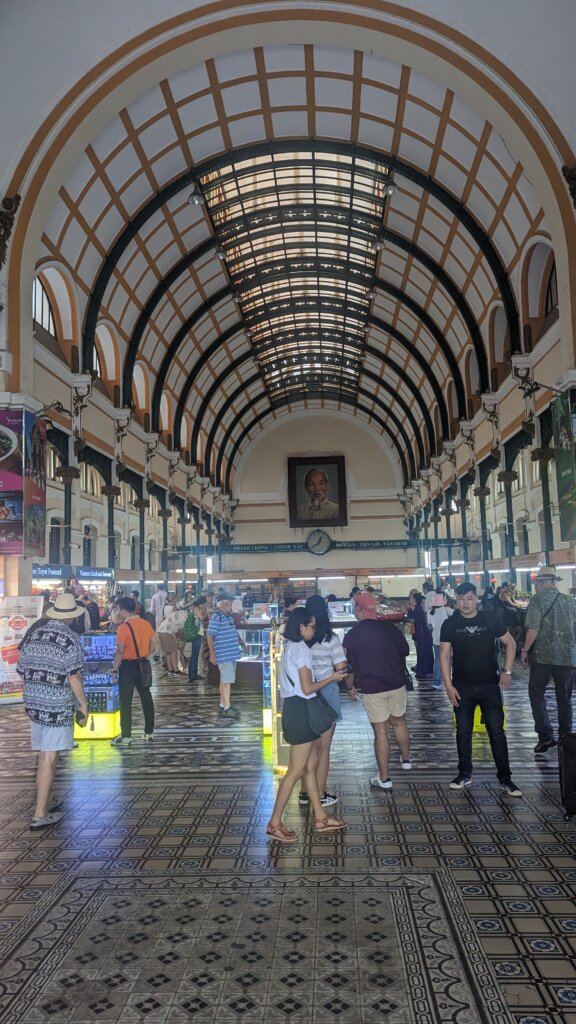
The final stop is the Post Office, constructed during French rule but not by Gustav Eiffel as some sources would have you believe. Inside are two giant maps, one of South Vietnam and one of the Northern territory. At the back of the building is a huge mural of Ho Chi Minh himself.


War, What Is It Good For?
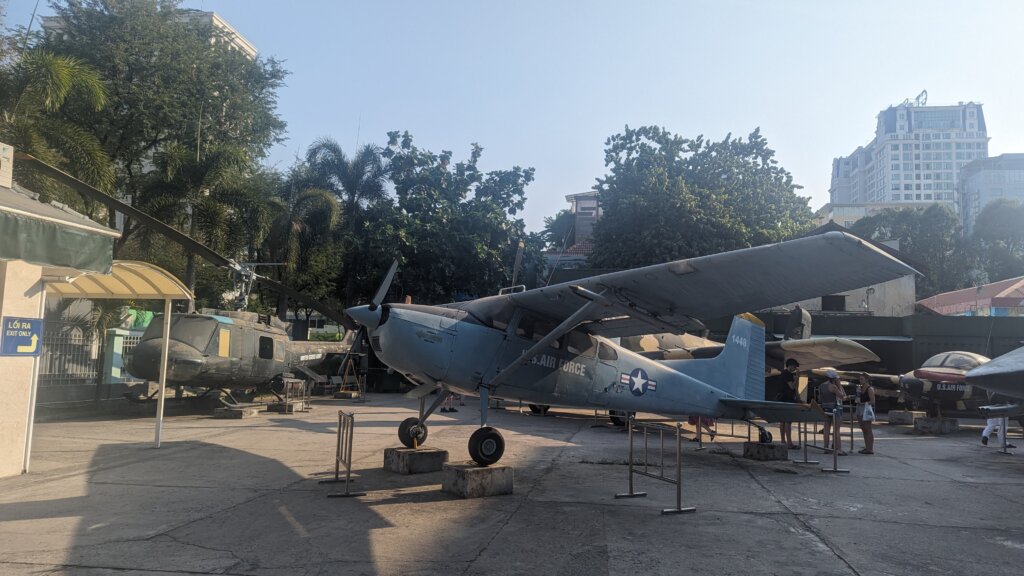
Feeling in need of some more history and culture, after lunch at a touristy food market we head to the War Remnants Museum. I won’t go too deep into the history of the Vietnam War here, if you’re interested in learning more I’d highly recommend this informative video:
https://youtu.be/7tNTh6KlXXU?si=zFsQa3xgOC4rzuh6
The museum is state-created, so you can imagine it presents a certain bias for what happened, as is the privilege of the ‘winning’ side. From what I can understand it boils down to…
- The French occupiers a.k.a colonialists, were concerned with their waning power and influence in the region
- America recognized this too and coupled with their own concern that supplies of tin and tungsten were at risk decided to support French aggression by supplying arms to the French occupiers
- Over time it became clear that what both feared the most was the spread of Communism. Influenced by Lenin and Stalin, Vietnam had begun to convert to a communist way of life.
- This was divided by the communist leaning North and the more Western friendly South.
- Eventually the French began to lose ground so America reinforced their support with a devastating bombing campaign known as “Rolling Thunder”.
- They dropped more bombs on Vietnam than during the entirety of World War 2.
- The mines and unexploded bombs dropped by these planes have caused horrendous injuries and many deaths years after the war ended
- Somehow the Viet Cong (Vietnamese Communists) kept the fight going and America eventually sent troops across. This was simply trying to save face instead of pulling out of a war it had no right or justifiable reason to be in
- Vietnam became a testing ground for the US military to test new weapons and showcase them to potential buyers for the world to see. Including the horrors of napalm and the devastating Agent Orange
- Despite continued tragedies being inflicted on both sides, information about the truth of the atrocities was not reported back in the USA
- Vietnam launched the Tet offensive and although they suffered heavy losses it made it clear to American’s back home that they were not winning this war as they’d been told
- War photographers were able to capture the true horrors of what was going on as publications eventually started printing the evidence contrary to the government’s propaganda
- There’s ample evidence of crimes against humanity being perpetrated by the USA forces and government orders. There are also tales of USA forces standing up against some such atrocities
- Anti-war sentiment coupled with financial and human cost eventually lead to America withdrawing troops
- They did continue bombings and supporting the Southern Vietnamese until Saigon finally fell in 1975, with a tank crashing through the Imperial Palace marking an end to a brutal war

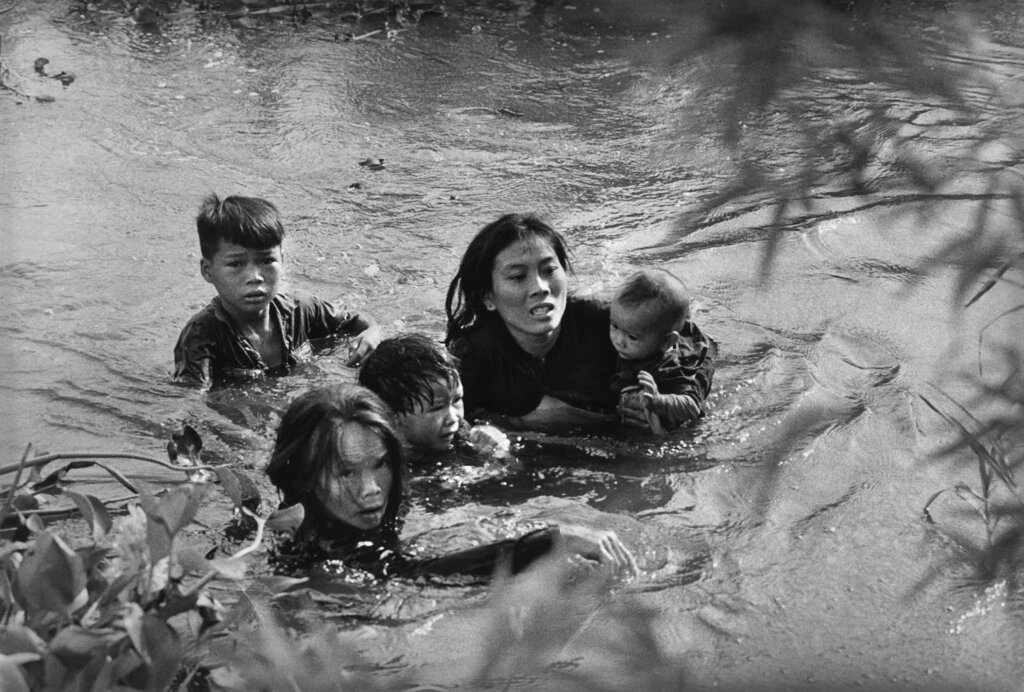
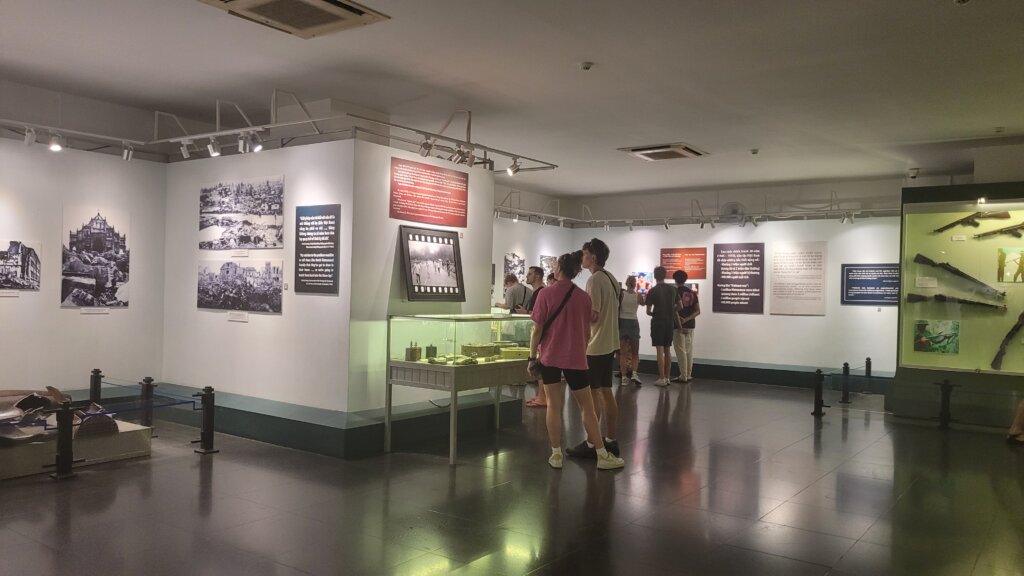
We view a gallery of some breath-taking war photos taken by daring photographers, many of which were killed in the process. Here are some examples:

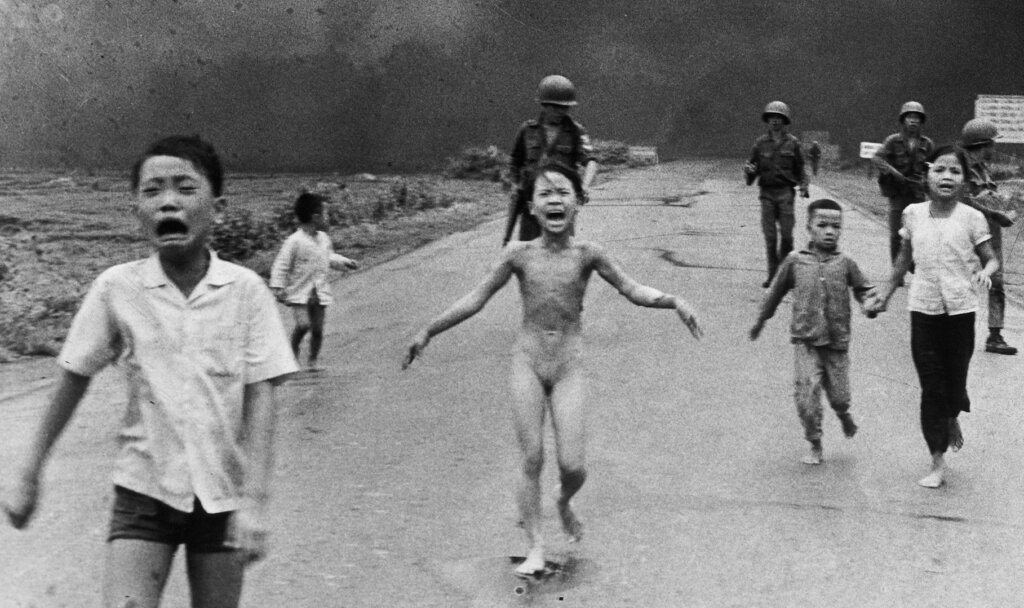

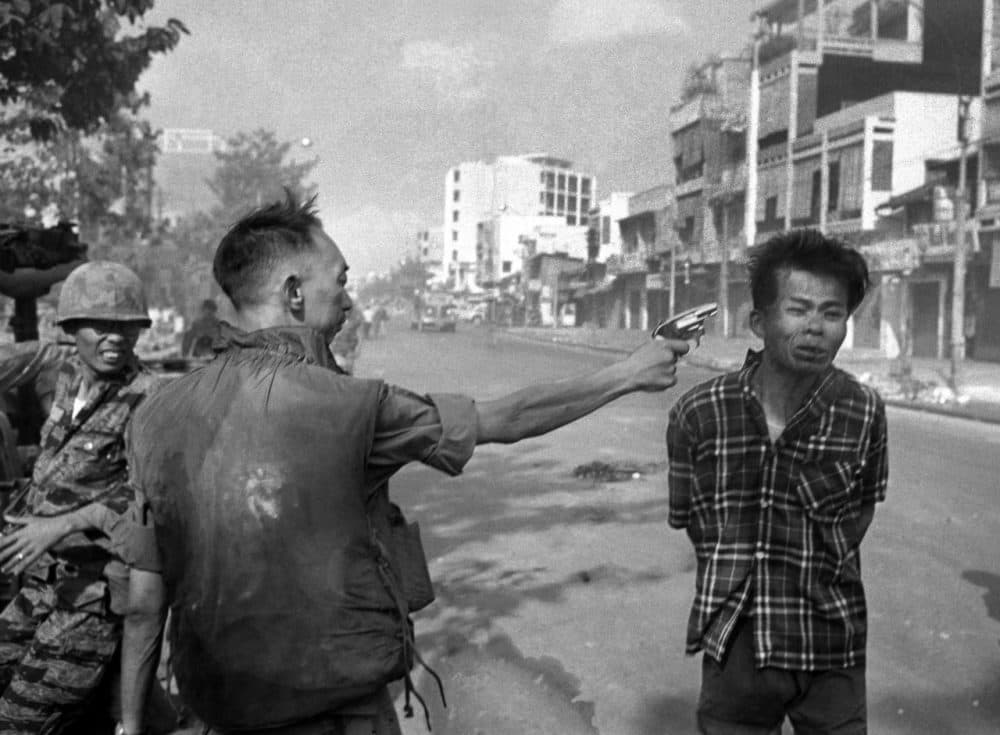
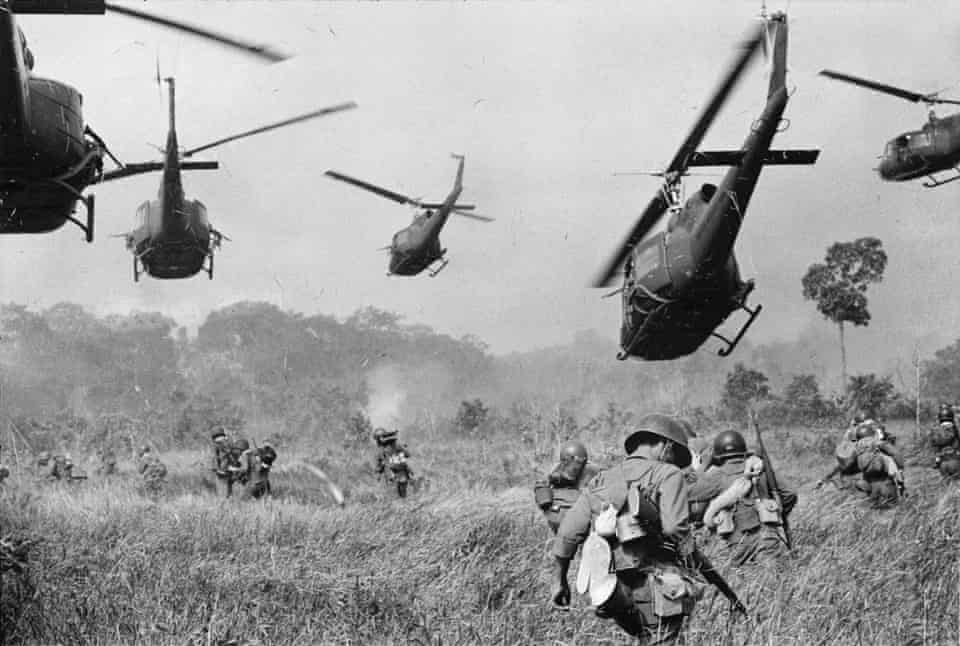
The next gallery we view is dedicated to the horrific effects of Agent Orange, a chemical weapon developed and deployed by the American forces. I won’t share any of the images from here, you can find out for yourself if you want. Note that this illegal and highly dangerous substance was dropped on innocent Vietnamese citizens for over ten years. Not only affecting the poor people it was dropped on but their children and grandchildren too, mutating their genes for generations.

Needing a bit of a pick-me-up, we head back to the same dinner location as last night. This time Alex goes for pineapple rice while I enjoy Vietnamese hot pot.

Cu Chi tunnels
More war stuff… This time outside of the city in an area known as the Cu Chi tunnels. These intricate and very small tunnel networks were used to hide from the enemy and often counterattack them. The Viet Cong were excellent at guerilla warfare in the hot humid jungle that American soldiers were not trained to fight in. Although usually outnumbered and outgunned, the Viet Cong often had the upper hand.

Pre-tour info
- Vietnam had been fighting China for 1000 years for independence. Then 50 years against France. Then 21 years against the USA. Part of the reason they are so proud of their independence today.
- In 1945, 2m died from starvation (because of French rule). Lack of food meant the population was very small in size, which meant they could build small holes for tunnels that the westerners wouldn’t be able to get through. They also put in lots of traps. “Tunnels to hell”.
- At first, the tunnels were built just as basements to hide valuables under houses because people couldn’t be trusted. Then they connected them up as the war started.
- There is a village for the victims of agent orange to look after them, providing care and work opportunities. The USA has provided no such support for its own citizens’ impacted by their exposure.
- The war is over but the pain is still here.
- The problem is not from the soldier or the people, it’s from the people in power.
- 1000 tourists visit this site every day. They made it a tourist destination to show how resilient the Vietnamese people are, and in a hope they never have to live or hide or fight in tunnels ever again.
- Tunnels are now around 70 years old. The ones we can go in are constructed as the real ones are too dangerous due to structure, size or scopions.
Tour Info
- Two main reasons the tunnels were built here. The land is strong enough to make tunnels and it’s next to the river for a water supply.
- Mekong delta is the biggest rice field in Vietnam (and why it was and is so valuable).
- 1948, the first basement for hiding goods is built.
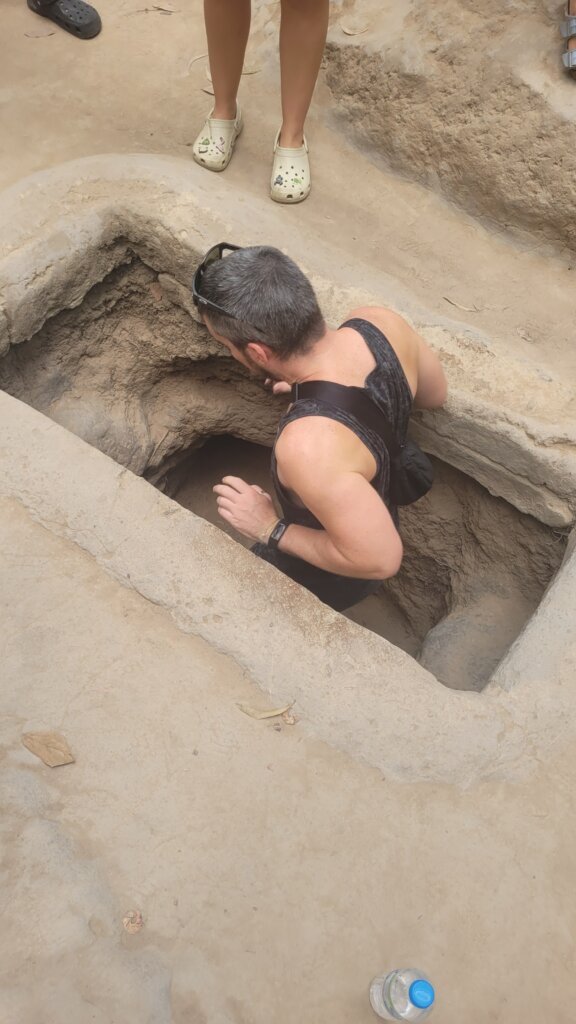
- The tunnels are all made without machinery, just a small hand tool and a hand basket.
- The people would work the land during the day. Hide at night.
- They created fake tombs to camouflage entrances.
- The tunnels go 10-12m deep.
- They would have to cook underground. This meant they developed an elaborate sytem of separate chambers to disperse the smoke away from where they really were. Only cooking in the morning allowed, so the smoke would disappear into the morning haze.
- Tunnels connect with the river, but they also used underground wells.
- Airholes were added for ventilation.
- There are around 1000 secret entrances.

- The guerilla traps not only killed and mutilated soldiers, it also created a mental anguish on the soldiers, weakening them mentally as much as physically. Creating fear of every step.
- The black uniform was for the Viet Cong and locals, which is why locals would often be confused for the enemy and killed. Double-edged sword.
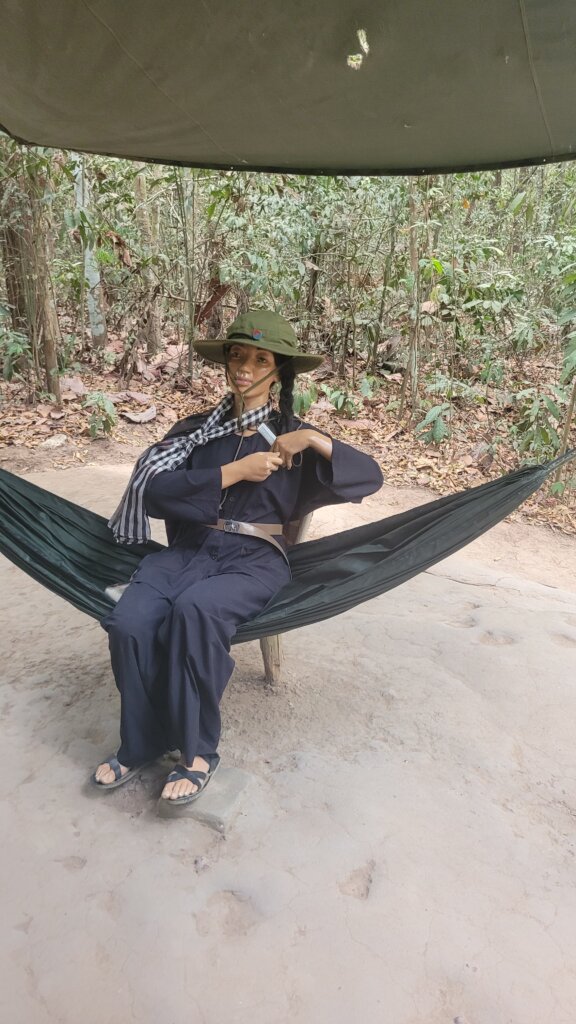
- This also meant the VC could hide within the locals without being identified.
- The flag at the time was blue for South, red was for North.

- The current flag is just the red part, apparently signifying their unity through bloodshed.
- They would use clothes of the caught enemy to camouflage air vents from sniffer dogs trying to find them.
- They also put coffee and chili powder on edges.
- This whole area was setup with traps. Traps between tunnels, traps within tunnels, traps outside tunnel entrances, even fake entrances to lure soldiers to traps.
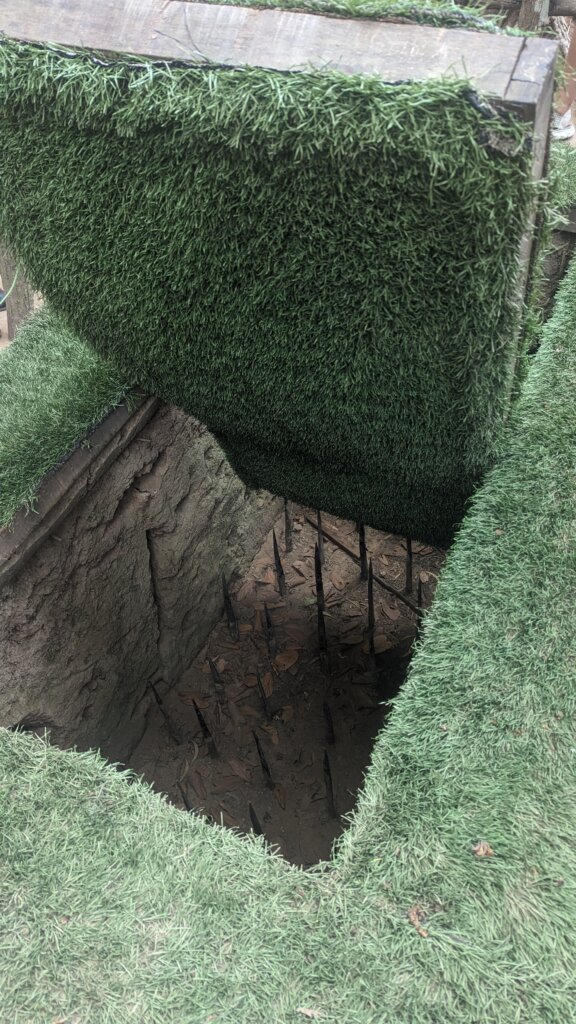
- Spike traps had fishhooks to make it harder and more painful to extract. These were made by hand from bomb shells and tanks.
- Traps were made of bamboo spikes or bomb shells.
- Traps were designed not to kill, just maim and slow them down.
- 500,000 bombs were dropped in Vietnam by the USA.
- The locals would collect the dynamite from unexploded bombs and use it against them.
- Shoes were made out of tyres, but with the underside so it wasn’t flat so they wouldn’t leave footprints.
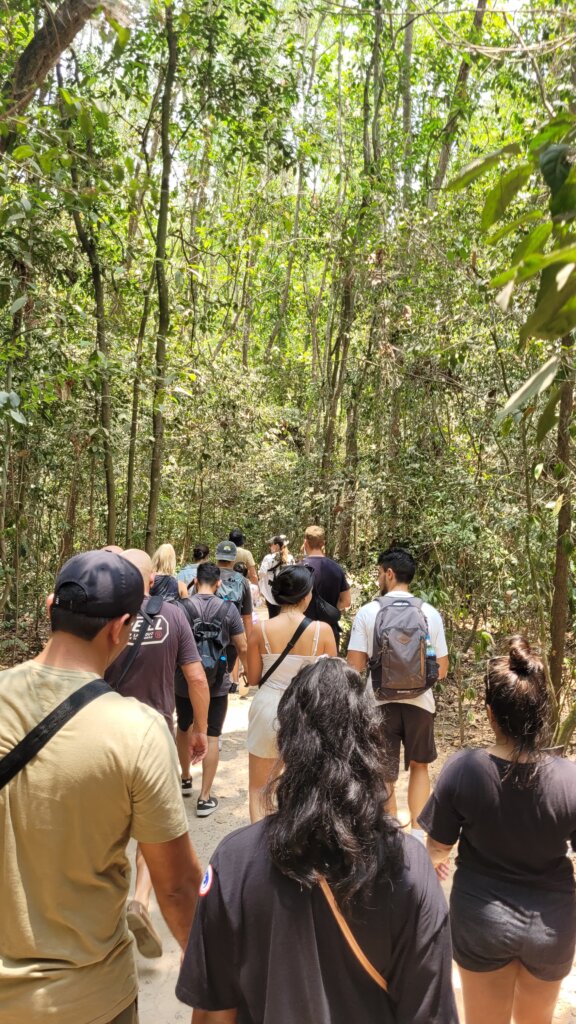
- This whole area is now full of trees, but back then it had been flattened by bombing.
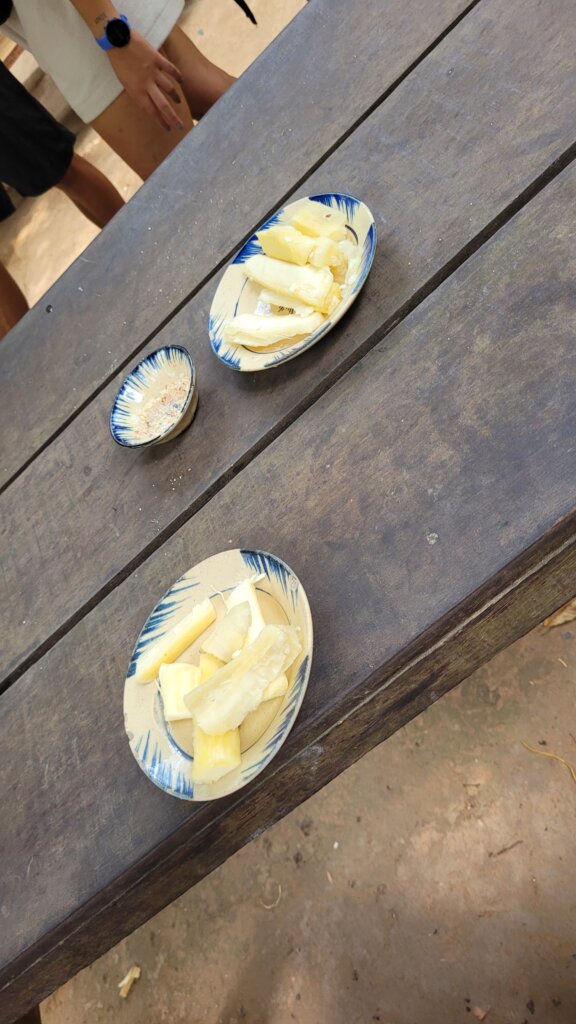
- There wasn’t much they could grow around here during the fighting, but cassava/yams/yuca were still viable. To make them slightly less boring, they were eaten with sugar and peanuts. It’s not bad. But probably not something we’d want to eat everyday for 10 years
Despite the huge difference in forces, it’s easy to understand the mental torture inflicted on the troops sent out here, and how the resilience and ingenuity of the local people managed to keep them at bay.
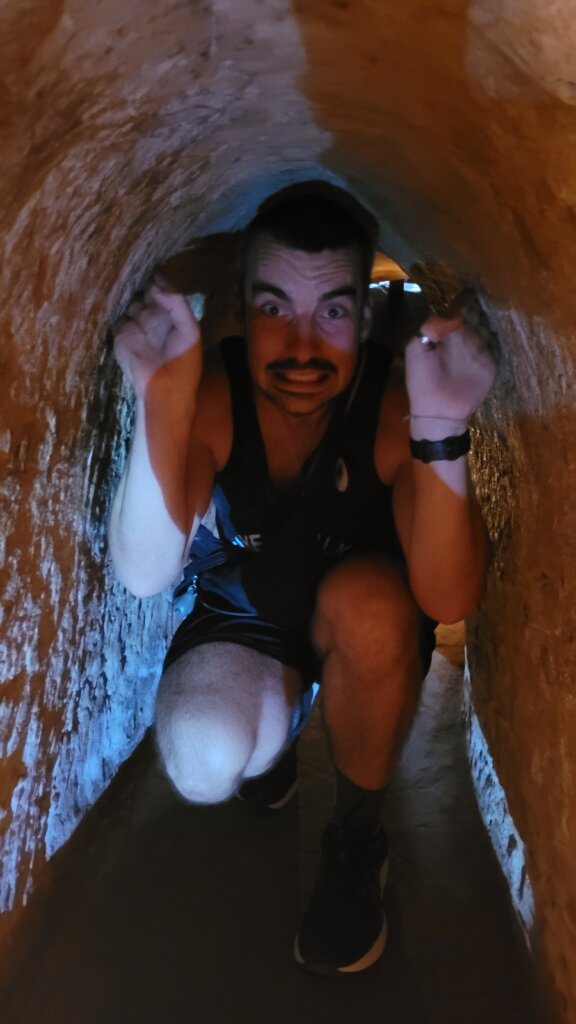
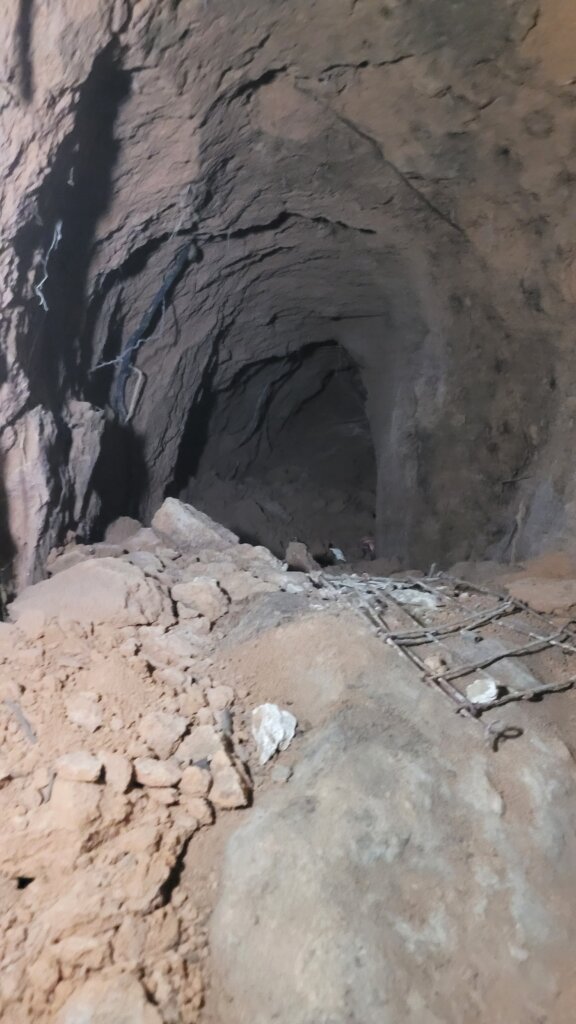
We avoid the firing range, turning down the opportunity to spend $20 to fire a mounted AK47 or M16. We do partake in crawling through the tiny tunnels, it’s a sweatbox down there and I often end up crawling most of the way, watching out for roaches, rats and spiders.
Evening out
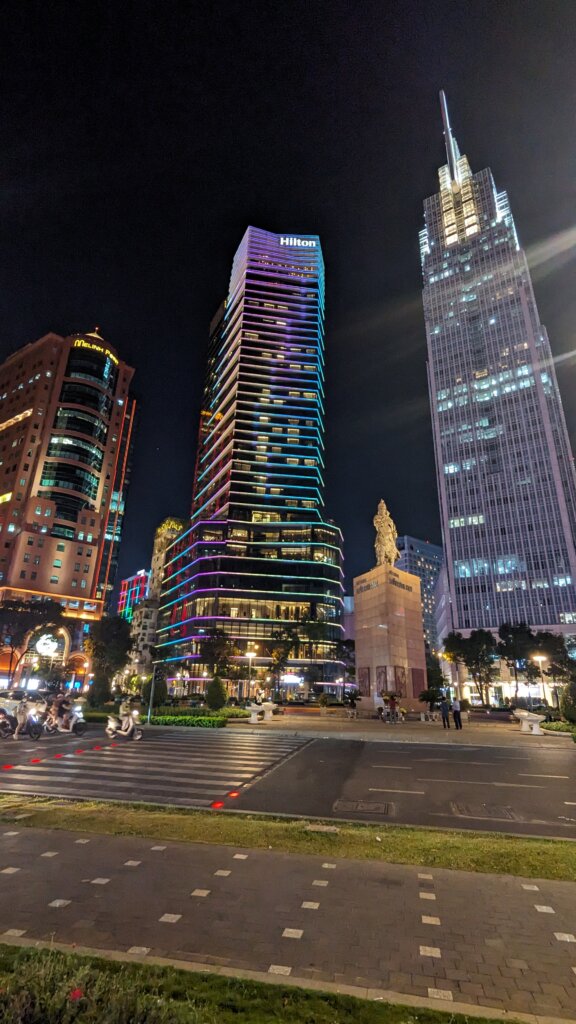
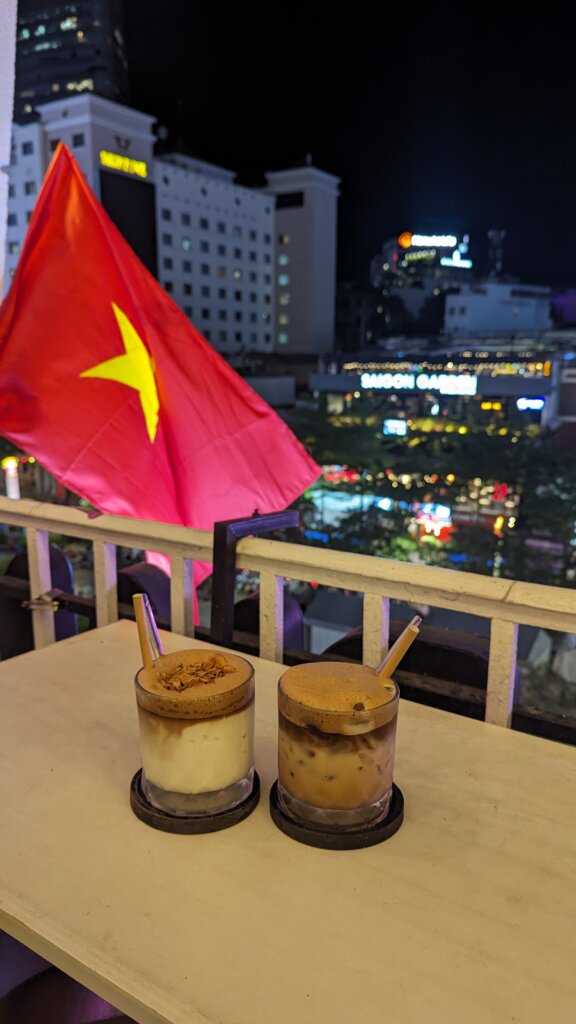
We spend our final night in Ho Chi Minh taking in this massive city and having a nice dinner in the center of town…



A Tale of Two Cities
The city – Old rustic markets selling locally sourced produce from tiny vendor plots. Cheap knock-off goods galore. Streets and buildings emblazoned with Communist flags and iconography, some still named after Saigon and murals of Ho Chi Minh. Banh Mi, Pho, iced teas and coffees sold cheap in vast quantities. Densely packed alleys and pavements bursting with locals spilling out on their plastic chairs and scooters. Remnants of the wartime.
And the City – Huge property developments. Dizzying skyscrapers. Multistory, air-conditioned shopping malls selling luxury brands. Belgian craft beer. Decadent party boats. McDonalds. Starbucks.
Has the communist dream of Ho Chi Minh been consumed by the avarice of capitalism? Was all of that fighting and death for nothing but each side fearing the other’s ideology, only to merge less than a generation later?
************
Adventure – Crawling through the Cu Chi tunnels, claustrophobic doesn’t even begin to cover it. Trying specialty coffee flavours.
Excitement – I finally made it to Vietnam, four years later than planned. Good quality bread at last. Free cash withdrawals. Lovely food.
Trauma – Obnoxious Aussie bloke on the tunnels tour, we’ve come here for the tour, not for you fella. United letting a 3-0 lead slip. Melting heat. Scooter wars. More tales of warfare and human collateral. Shooting range.
2 Comments
Amazing blog, I was stunned to see I recognised a couple of the black and white pictures from years ago. The one with mother and children in the water, and Napalm girl. Brave to try the tunnels, I think they would have been too tiny for me. Glad you got to watch the Marathon, it was a fantastic day and of course United getting to the Final was a bonus 😂 . I’m surprised you didn’t try the Shark Boat 😉. Vietnam looks another great place to try, dodging the traffic of course. Look forward reading the next blog. XX
They were incredible photos and very brave people out there taking them. The tunnels were very small, hot and claustrophobic, I don’t know how the local people were able to eat, sleep and live in them for so long. My opinion of Vietnam has improved massively since we left Ho Chi Minh, much more content to come 😉 x