As we leave Peru for Bolivia, and look back on the last month, we decide to take inspiration from the Chacana and rule of 3 of Andean history to summarise our time in Peru. I also think of all the conversations, stories, ideas and experiences we’ve had along the way that don’t make it into a destination post, but we still want to be able to look back on and remember. After all, it’s not always about the destination eh! So, here’s that post. A summary and mishmash of the cutting room floor, probably more for us than anything else.
Peru Rule of 3 Summary
Highlights (Alex) – Inca Trail, Lake Sandoval, sharing almejas (clams) with James in Lima.
Highlights (James) – Inca Trail, Colca Canyon, Huacachina sand dunes
Lowlights (Alex) – constantly sweating in the jungle, feeling taken advantage of/conned, tummy trouble on the Inca Trail
Lowlights (James) – night bus to the jungle with farting and snoring passengers and getting thrown around on the winding road, Peruvian drivers with a death wish, getting mithered in Cusco by touts
Takeaways (Alex) – pachamama, what the world lost from colonialism here, how hard everyone has to work and does work (plants and humans)
Takeaways (James) – the disparity of wealth, kindness and hard work of people, what would have happened without colonialism
How to Describe Peru (James and Alex) – Historic, Exquisite food, Diverse landscapes
Favourite Foods
- Ceviche (sea bass in Lima, trout in Cusco)
- Polleria (rotisserie chicken) our most popular meal!
- Stuffed avocado
- Almejas (El Rincon del Bigote)
- Cusco special meal, very tasty
- Tent cake 🎂
Entertainment
Podcasts: Criminal, Talk of the Devils, A short history of.. Machu Pichu and the Inca Trail, More or Less, This Is Love
TV & Film: Nobody, Sex Education, Taskmaster, Ant Man Quantumania
Books: The Red Pony, Of Mice and Men, The Freeze, Treasure Island, The Midnight Library
The Bits in Between
- Most of the people we’ve met are here for a short break. This teaches me that it’s still possible to have these amazing experiences once we come back, our travels don’t end after this trip.
- How dry everywhere is, and how much harder that makes everything. From staying hydrated, to breathing, to staying clean, to growing anything, to surviving. Nothing comes easy here, for many reasons, but I hadn’t appreciated before just how dry everywhere west of the Andes is (we get told that 90% of water flows east from the Andes in a tour, but I can’t find a source to confirm that)
- From our guide in Colca, Eric – tourism doesn’t just give opportunity and ‘wealth’ to guides and porters. It’s just as much about the restaurants, the launderettes, the mini-markets, the taxis… wealth from outside the country brought in through tourism brings opportunity to people through these means they would never have otherwise have, and they are grateful for it
- The guides here have been some of the best I’ve had in the world, unsurprising because they have to spend 5 years at Uni to be one, which they have to pay for without such things as student loans.
- This has a knock-on effect of us understanding and appreciating Peru, its history and its people in a way we just wouldn’t get through touring on our own or with less educated guides
- When asked why there isn’t fixed accommodation along the Inca Trail (it’s just plots for tents and huts for toilets and porters), Odi pointedly explains it creates jobs for the porters, they need this work, it’s important for the betterment of their children’s lives. Efficiency isn’t everything here, quite rightly.
- When Covid hit, it was harvest season at the olive grove. They had around 800 people from the jungle, andes, local region living there temporarily for that purpose, and the police came and shut them down. They eventually managed to get re-opened as an essential food service, but it was a scary and difficult time. Once the harvest was over, the people were stuck because roads were shut, the family tried to find ways to get them out officially, but the people here are resourceful and they found their own means.
- During the pandemic, without tourism, most guides returned to their farms to help work the land, there was nothing else. We realise the money we pay for the guides and porters will feed into their children getting educations that may mean they become the next guides.
- Tourism had almost returned to pre-pandemic levels before political unrest dissuaded people from coming again, and now it’s dropped.
- Odi tells me how the political unrest wasn’t as bad as the papers made out, the people just wanted to be heard and they were largely peaceful protests. The media (influenced by government through money and power) made out that the situation was worse than it was to justify their aggressive (and sadly deadly) response. This tactic seems woefully familiar across the globe.
- Odi hopes that with more people learning about their pre-colonial history the culture and language will return
- Gabriella, the friendly face of PV Travels in Puerto Maldonado, tells us of her difficulty trying to acclimatise to the heat and humidity there from Cusco and also suffering (this makes us feel a bit less like pathetic gringos)
- Gabriella recounts her experience of the strikes in Puerto Maldonado, of the roads being blocked for a month so they had no gas, fuel or food. People were cooking with wood, having to walk everywhere (hard in 40 degree heat!), eating only what food could be sourced locally. The end is brought about by protestors losing support from the community, and them realising the only people impacted are their family and friends, their voices aren’t heard out here
- At one point, the protestors went to the governor’s house (a bog-standard flat in the centre of town) and pelted it with rocks smashing the windows. In response he leans out with a rifle and shoots into the air. The people start a meme of “The Governator” (a la The Terminator), the Internet is great.
- I would 100x prefer to be cold than hot.
Waiting and Views
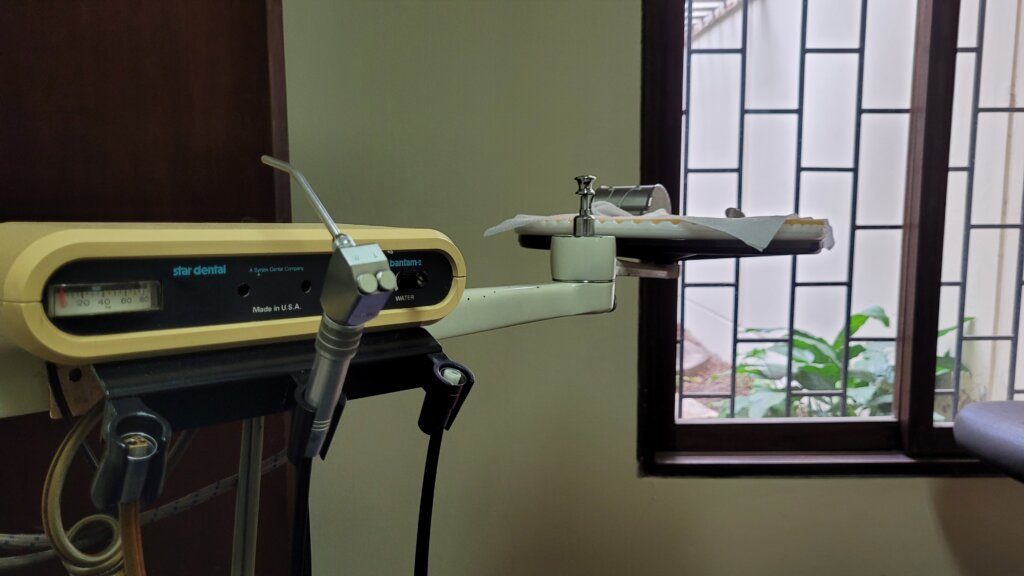
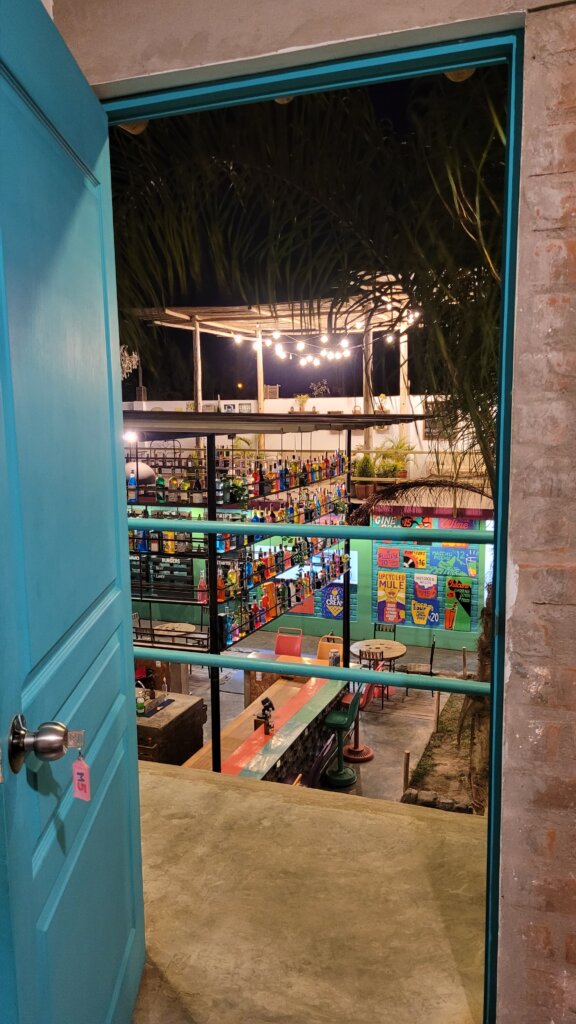
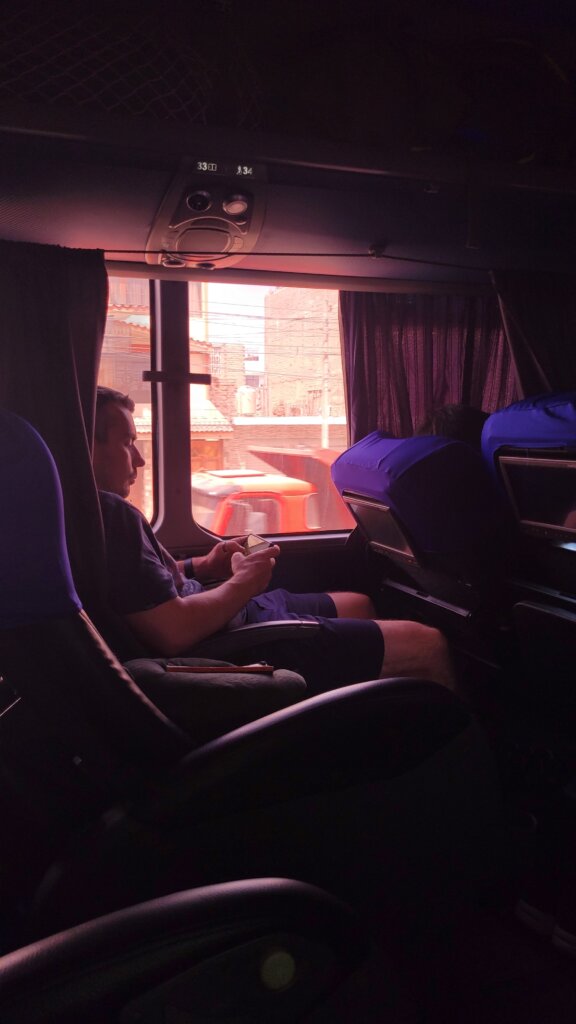
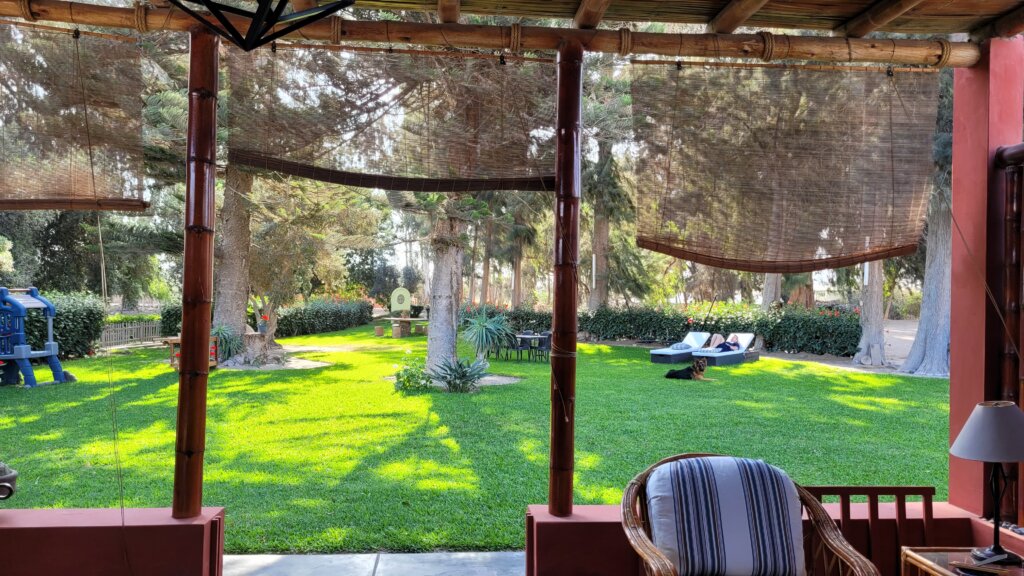
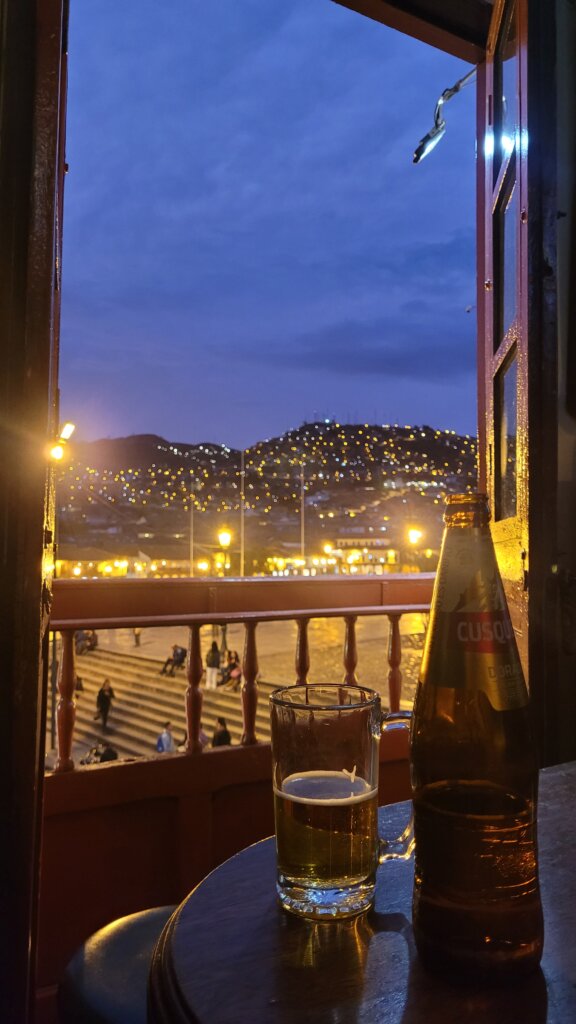
The photos in between, of killing time, of room views, of watching the world…